
Part 1: The Morning That Meant More Than Most
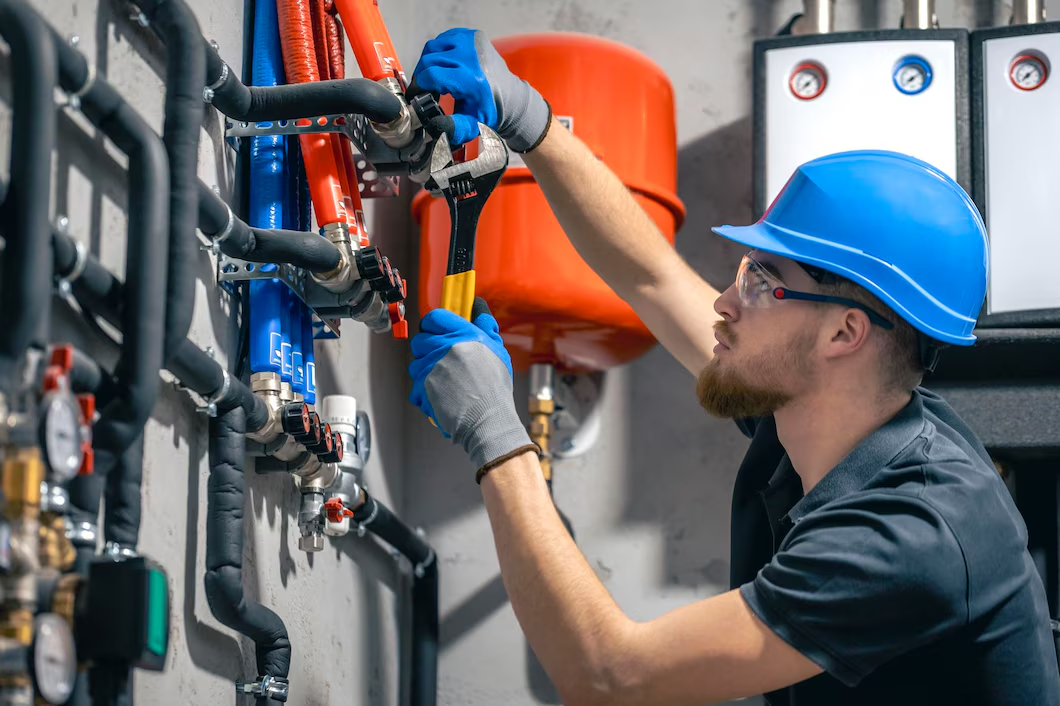
It was one of those crisp October mornings that felt full of promise—where even the sunlight seemed to whisper that something special was about to unfold. I can still picture the golden light filtering through our small kitchen window as my father, Mr. Harrison, readied himself for another day of work. But he wasn’t just a plumber. To us—and to anyone who had ever hired him—he was an artist with a wrench, a man who treated every job like a mission.
Even as a child, I could sense there was something sacred about the way he worked. I’d sit cross-legged on our cool kitchen floor, mesmerized, watching him handle each pipe and fixture with careful precision. His toolbox wasn’t just filled with tools—it was filled with pride. Each wrench and valve key was handled the way an artist holds their brush. He examined every joint, every corner, with a gaze that made you believe the job was more than plumbing—it was personal.
Dad never cut corners. If something didn’t meet his standards, he wouldn’t sleep until it was redone and shining like new. His reputation in our neighborhood didn’t come from fancy advertising or slick deals. It came from people witnessing, firsthand, his integrity and obsession with getting things right.
That day, he was starting a major bathroom remodel for the Waltons—a couple known for their high standards and even higher expectations. But that didn’t rattle him. In fact, he embraced the challenge with the same quiet confidence he brought to every project.
I remember how he walked out the door, toolbox slung over one shoulder, shoulders straight, eyes focused. Before he stepped off the porch, he gave me a look—a calm, knowing smile—that seemed to say, “I’ve got this.” That image of him, full of quiet certainty, is still etched in my memory.
At breakfast, while Mom and I chatted over toast and coffee, Dad was already lost in his notes and sketches for the Walton job. He barely touched his food, focused instead on timelines and fittings. Yet, despite the pressure, he radiated calm. That was his gift—making even the toughest task seem manageable. I still remember his favorite saying:
“Every pipe fixed is a promise kept.”
It wasn’t just about plumbing. It was about how he lived.
As he headed out that morning, the air smelled of fresh leaves and change. I felt like I was watching the beginning of something bigger than just another workday. His steps were firm, filled with purpose. And in that moment, I knew—deep down—that this job would become something more than just another renovation.
He disappeared down the street, the early sun casting a warm glow on his back. I stood there, feeling a pride that even now, years later, still brings a lump to my throat.
That day marked the beginning of a story none of us could have predicted—a day that would forever be remembered in our neighborhood not just for what was built, but for what it revealed about honor, hard work, and the true meaning of craftsmanship.
Part 2: Building More Than Just a Bathroom
The Waltons weren’t ordinary clients—they had a vision, and they were willing to spare no expense to bring it to life. Their dream bathroom wasn’t just a renovation; it was a carefully curated masterpiece-in-the-making. From sleek fixtures to artisanal tiles, every choice was handpicked to create a perfect balance of elegance and functionality. For my father, this job was a golden opportunity—an intersection of skill and style he had long waited for.
He was involved from day one. Not just as a contractor, but as a collaborator. He listened, advised, and gently guided the Waltons through the intricate decisions that come with custom design. “A small shift in design,” he often said, “can change everything—from how it works to how it feels.” His calm, patient approach earned their trust early on.
Each morning, Dad arrived like clockwork—toolbox in hand, that same familiar fire in his eyes. He didn’t treat this project like a paycheck. He treated it like a calling. Every pipe, every tile, every fixture—placed with a level of care that turned ordinary work into something extraordinary.
I spent many days on site, quietly observing from the sidelines. Watching him lay tile with surgical precision, fit each fixture with care, and test every component until it was flawless—it was like witnessing a living artwork take form. The once-plain bathroom slowly transformed into a modern sanctuary, glowing with the promise of peace and refinement.
The Waltons were fully immersed in the process, involved in decisions as detailed as grout color and sink placement. And yet, they always turned to my father for reassurance. His presence became the anchor of their project. They admired how deeply he respected the process, how nothing ever felt rushed, and how every single detail seemed to matter to him more than to anyone else.
One moment, in particular, still lingers in my mind. Late one afternoon, light spilling across the new tile floor, Dad stood back and quietly whispered,
“It’s not just about fixing—it’s about creating something worth keeping.”
That simple line stuck with me. In his hands, even plumbing became poetry.
As the weeks passed, the bathroom became more than a beautiful room—it became a space infused with intention. Light played off the polished fixtures, the subtle tones in the tiles brought warmth and grace, and the overall design began to breathe with life.
For the Waltons, it was a dream realized. But for my father, it was more—it was a legacy. A room that would speak of his love for the craft long after the tools were put away.
Looking back, those early weeks weren’t just about construction. They were about transformation—in design, in trust, and in what happens when heart and hands work together. With every nail driven and every surface polished, my father was doing what he did best—building something that would last, in every sense of the word.
Part 3: The Art Hidden in the Smallest Details
The renovation wasn’t just construction—it was choreography. Every decision, every tiny adjustment during the bathroom remodel carried the weight of intention. The Waltons were deeply involved from day one, poring over design books, debating tile colors, and positioning sinks with the precision of artists composing a canvas. Their attention to detail made it clear—this wasn’t just a bathroom. It was a dream brought to life, one tile at a time.
And right alongside them was my father.
He respected their vision, but he never shied away from offering insight. “Perfection is possible,” he’d say gently, “but sometimes, a small shift can make it sing.” His words weren’t forceful. They carried the quiet authority of a man who had spent his life turning ideas into reality.
I remember a specific afternoon—two shades of blue tiles spread across the table, both stunning, both contenders. The Waltons were torn. My father observed silently, then reached for a third tile. It was subtle, a blend of the two they couldn’t decide between. “This one,” he said, “carries the soul of both.” At first, they hesitated. But when they saw it in the light, their hesitation turned to awe. That moment told me everything about who my father was—not just a worker, but a translator of dreams.
Every inch of that room mattered to him. From measuring spaces twice to marking tile lines with pencil-thin precision, he moved like a man composing music—rhythmic, intentional, and tuned to perfection. “Measure twice, cut once,” he’d remind me with a smile, a phrase I’d heard so many times, but only now began to understand.
When a single tile didn’t sit right, he didn’t grumble. He simply lifted it, reworked it, and reset it until it blended in like it had always belonged. To him, there was no compromise when it came to alignment, symmetry, or finish. “Good enough,” was never in his vocabulary.
What struck me most wasn’t just the quality of the work—it was the spirit behind it. The Waltons, initially clients, began to treat him like a collaborator. Conversations turned philosophical—how light changes the feel of a room, how a simple color choice can shift the energy of a space. There was a respect forming that went beyond the physical transformation.
He didn’t just build a bathroom. He honored it. Every fixture was placed with care, like it held a memory. Every tile was not just part of the wall—but part of a story. I began to see the work not as labor, but as language—my father’s way of communicating respect, pride, and heart.
And slowly, I understood what he’d always meant when he said,
“Perfection isn’t about showing off—it’s about showing care.”
By the time the room neared completion, it shimmered with subtle sophistication. Not loud or flashy—just deeply, quietly beautiful. It felt like more than a space. It felt like a promise fulfilled.
Looking back, those days beside him were my true education. He taught me, without ever saying it out loud, that greatness lives in the smallest decisions. That every choice matters. That real beauty isn’t loud—it’s earned.
And most of all, he taught me this: When you pour your heart into your work, it shows—in the way the light reflects off a polished tile, in the way a once-empty room begins to breathe.
Part 4: When Trust Built More Than Walls
For weeks, the rhythm of the renovation played out like a symphony—steady, thoughtful, and full of harmony. My father and the Waltons had developed more than just a working relationship; they had built a genuine partnership, grounded in mutual respect and a shared vision. Each morning, as Dad arrived with his toolbox and trademark calm smile, the site came alive with quiet anticipation. You could feel it in the air—this was no ordinary renovation.
The Waltons weren’t distant or detached like some homeowners tend to be. They were fully present, engaged in every decision. They came to every meeting, examined every layout sketch, and discussed each fixture with the same excitement my father had in his eyes. It wasn’t about micromanaging—it was about building something meaningful together. “This space should reflect your soul,” Dad once told them. And they listened—really listened.
What unfolded wasn’t just construction. It was collaboration at its finest.
Dad moved through the project like a conductor leading an orchestra—communicating with suppliers, adjusting timelines, solving unexpected challenges with grace. Even when a hidden pipe was off-center or a wall wasn’t perfectly square, he didn’t flinch. He adapted without sacrificing the integrity of the work, always staying anchored in quality.
I’ll never forget one quiet afternoon. My father was laying the final row of tiles in the custom shower when the Waltons walked in. No one said a word at first—they just watched. The soft light caught the freshly laid tiles, and for a brief, breathless moment, time seemed to pause.
“It’s perfect,” Mrs. Walton said, her voice barely above a whisper.
Mr. Walton added, “We couldn’t have asked for anything more.”
And in my father’s eyes, I saw a flicker of emotion—pride, gratitude, maybe even a little awe.
Despite the growing praise for his work, Dad never acted like a man chasing accolades. He remained humble, always listening to feedback, often fine-tuning his methods to better reflect the Waltons’ evolving preferences. He struck the perfect balance—upholding his standards while honoring their dreams.
By the final stretch of the renovation, the bathroom had become something else entirely. The light bounced off polished fixtures, the tiles seemed to hum with warmth, and the space invited you in. Every piece fit like it had always belonged. It was more than elegant—it was alive.
What struck me most wasn’t just how beautiful the bathroom turned out. It was how the process itself—the collaboration, the patience, the passion—became its own kind of masterpiece. Watching my father navigate it all taught me more than any classroom ever could.
Because in the end, it wasn’t just the walls he built—it was the trust, the joy, and the legacy he left behind.
Part 5: A Masterpiece Betrayed
Weeks of careful planning, relentless work, and deep dedication had brought the Waltons’ dream bathroom to life. Every inch of the space bore my father’s signature precision and quiet artistry. The room was more than just a renovation—it was a testament to everything he stood for: craftsmanship, patience, and integrity.
On the final day, Mr. Harrison arrived early, as always. His focus was unwavering as he applied the last finishing touches. The polished fixtures, the gleaming tiles, the flawless alignment—everything had come together just as planned. It was a project that deserved celebration. But instead, that day unraveled into something we never saw coming.
The shift was sudden.
One moment, the Waltons were beaming with pride. The next, they were questioning everything. With stiff expressions and clipped tones, they began picking apart the very elements they had personally approved—especially the tiles they had spent hours selecting. They claimed the design was wrong, that the tiles didn’t reflect their “true vision.” It was bewildering.
Then came the blow: they would only pay half.
Half the agreed amount. Half, after all the sweat, hours, and heart my father had poured into their so-called sanctuary.
Dad, ever composed, tried to reason with them. He showed them the original samples, invoices, the agreed sketches—the proof that every detail was carried out exactly as discussed. His voice was calm, respectful, but firm. “Everything here was chosen by you,” he reminded them gently. “I’ve honored every part of our agreement.”
But they weren’t interested in facts. They weren’t interested in fairness.
Their tone hardened. Their words became cold. And just like that, a relationship built on weeks of collaboration was shattered in seconds.
I’ll never forget the look in my father’s eyes as the truth settled in: he had been betrayed.
Not just financially—but personally.
This wasn’t about money. It was about honor. And yet, even in that crushing moment, my father didn’t walk away. He didn’t yell. He didn’t argue. He quietly finished what was left, not for the Waltons—but for himself.
“I made a promise,” he whispered, more to himself than anyone else.
“And I’ll keep it.”
That evening, as he packed up his tools—those same tools he had always treated like sacred instruments—the weight of disappointment hung heavy in the air. His shoulders seemed to sag just a little more. The triumph we had all anticipated had been stolen, not by failure, but by greed.
The neighborhood buzzed with the news. Whispers of what had happened spread fast. And though no one said it aloud, the community knew: a man who had poured his soul into his work had been deeply wronged.
That final day, meant to mark a legacy, became a reminder of how even the purest intentions can be scarred by someone else’s selfishness.
And yet, through it all, my father’s integrity never cracked.
Part 6: The Wound That Wouldn’t Be Ignored
The days that followed the Waltons’ betrayal felt heavy, like the air itself had thickened. My father, a man known for quiet strength and pride in his work, now carried a burden that went far beyond an unpaid invoice. This wasn’t just about money. It was about everything he believed in—honor, integrity, and the belief that honest work would always be respected.
But this time, it hadn’t been.
Word spread quickly. Neighbors whispered with wide eyes and lowered voices. The man they’d always respected had been shortchanged—by the very clients who once trusted him completely. And though they offered their sympathy, none of it could undo the deep sting of being dismissed like a hired hand, disposable and undeserving.
At home, I watched him in the quiet. No anger. No rage. Just silence. A sadness that clung to him like dust. He would sit at his old workbench, hands resting on his tools—those same tools he once treated like sacred companions. His fingers lingered on them, as if trying to remember a time when they only represented purpose, not pain.
“They think they can cheat me out of a lifetime’s work,” he said one evening, his voice soft and cracked.
Each fixture, each tile—he had poured his heart into that space. And now, it felt like all of it had been dismissed with a single cruel decision.
Still, he didn’t stop.
He finished the bathroom anyway—not for the Waltons, but for himself. For the promise he had made to the work. For the idea that excellence should never be abandoned just because someone else failed to value it.
But I couldn’t stay silent.
Watching him work through that pain while pretending not to care—it lit something inside me. A fire. A mission. I began to gather every email, every receipt, every signed plan. The truth was right there, and I wasn’t going to let it be buried under their lies.
This wasn’t just about restoring his dignity.
It was about sending a message—to every client who ever thought they could treat a skilled worker like he didn’t matter.
Evenings passed with the TV flickering in the background, but his gaze was elsewhere. His usual spark—muted. But not gone. I saw it still, flickering beneath the hurt.
And one night, he looked up and said,
“I will finish what I started. Not for them—but for what I believe in.”
That was the moment I knew: we weren’t just finishing a job.
We were beginning a fight.
I reached out to anyone who would listen—legal experts, trade unions, construction boards. I laid out the facts, the documents, the truth. Every hour worked. Every detail honored.
What the Waltons did wasn’t a misunderstanding. It was exploitation.
And deep down, I knew—this wasn’t just about my father anymore.
This was about every craftsman who’s ever been dismissed, underpaid, or silenced.
The pain of betrayal is sharp. But the fire it lights… that’s something else entirely.
Part 7: Her Fight for His Honor
The betrayal didn’t just scar my father—it left a mark on all of us. But where he met it with silent dignity, I felt something stronger rise within me: the urge to fight back. Not with anger, but with truth.
I couldn’t let this go.
Not just for him—but for every hardworking soul who had ever been treated like they didn’t matter.
So late into the night, while my father slept—exhausted from finishing a job he should’ve been applauded for—I sat down and began to build something of my own. A case. A voice. A plan.
I poured over every file, every photo, every receipt. I organized everything with meticulous care—because I knew that if I was going to tell the story, it had to be undeniable. It had to be real. It had to shake the people who thought they could cheat a man like my father without consequence.
Neighbors who had watched him work offered support. Some gave written words. Others shared what they had witnessed. Bit by bit, I began building not just a file—but a movement.
I wasn’t after money. I was after truth. After justice. After respect.
I reached out to trade unions and professional boards. I shared our story anonymously on blogs and forums. Slowly, the silence began to break. People listened. Some even shared their own stories—proof that what happened to my father wasn’t rare. Just rarely spoken about.
Each night I prepared, I felt less like a bystander and more like an advocate. No longer just the daughter of a craftsman—but the voice of his legacy.
And when I stood in front of our community, armed with every shred of proof, I didn’t speak with rage.
I spoke with conviction.
“This isn’t just about what was taken,” I told them.
“It’s about what should never be allowed again.”
That day, something shifted. The Waltons couldn’t hide anymore. Their silence, their avoidance—it told everyone exactly who they were. But more importantly, everyone now knew who my father was too.
Not just a plumber.
Not just a contractor.
But a man of honor.
And I had made sure his story would be remembered that way.
Part 8: The War Fought in Silence
In the days that followed, I turned our dining table into a battlefield—not with weapons, but with paperwork, photographs, and evidence. While my father quietly carried the weight of betrayal, I carried the fire to make it right.
I revisited the worksite, capturing every inch of the bathroom he had so lovingly crafted. The symmetry of the tile work, the gleaming fixtures, the spotless finishes—each photo felt like a page from a design magazine. But this wasn’t vanity. This was proof.
Back at home, under the soft glow of my desk lamp, I dove into a mountain of contracts, receipts, and correspondence. I matched every phase of construction to its paper trail. Consultations. Material orders. Emails confirming the Waltons’ approval. Every timeline, every detail—crystal clear.
The story was simple: perfection had been delivered. Betrayal had been returned.
To strengthen the case, I reached out to vendors. One supplier even provided a signed statement verifying that the exact materials requested had been delivered—on time and to spec. Their voices added credibility to ours.
But I didn’t stop there.
I gathered testimonials from neighbors, fellow tradespeople, and long-time clients—people who had seen my father’s dedication firsthand. Their words were raw and real. They spoke of a man who never cut corners, who treated every home like his own, and who gave more than he ever asked for in return.
Each document I filed, each voice I added, was a brick in the wall I was building—not to protect us from the world, but to stand tall against it.
It was exhausting. There were nights I wanted to give up. Nights when grief weighed heavier than purpose. But then I’d look at the evidence and remember what was at stake—not just money, but my father’s name.
I digitized every file, labeled each folder, wrote out timelines, and captioned every photograph with obsessive care. Slowly, a report began to take shape—a blueprint of justice. It included everything: before-and-after shots, detailed receipts, original design approvals, and the final, bitter correspondence that showed just how cruel the Waltons’ betrayal had been.
And somewhere between those long nights and early mornings, something changed in me.
I wasn’t just collecting proof.
I was restoring truth.
I was no longer the quiet daughter watching her father hurt.
I had become his advocate—his shield.
And when I finally stood back and looked at what I had built—piles of organized files, a detailed case report, and countless visual records—I felt something I hadn’t felt in days:
Hope.
Because now, we weren’t just surviving.
We were ready to fight.
Part 9: The Day the Truth Was Heard
With our case airtight and the evidence undeniable, I knew it was time.
The Waltons may have tried to bury the truth behind smiles and silence—but I was ready to bring it into the light.
I began planning how to present our story—not just to call out their betrayal, but to awaken our community. I reached out to neighbors, local tradespeople, and small business owners who had long respected my father’s work. Many had faced similar injustices but never had the platform—or the strength—to speak up.
This was going to be different.
I booked our local community center and sent out invitations under the title:
“Community Standards and Fair Business Practices.”
It was subtle. Purposeful. The message would spread—without alerting the very people we were exposing.
For days, I rehearsed my presentation. Every slide, every photo, every timestamped receipt—arranged in perfect sequence. Not for drama, but for clarity. For truth.
When the day arrived, the room filled quickly. Neighbors whispered, speculated, and scanned the displays I had laid out—documents, photos, signed statements. The hum of anticipation was electric.
Then I stepped up.
And I told them everything.
How my father had treated this project not like a job, but like a personal mission. How he had listened, collaborated, delivered excellence beyond expectations. I walked them through the process—slide by slide, image by image—until the story of betrayal on the final day hit the room like a thunderclap.
Gasps. Murmurs. Then silence.
Because the truth was undeniable.
I laid it all out—emails, contracts, photographic proof. The sudden, unjust demand for half-payment. And the quiet pain my father endured, finishing the project anyway, holding onto his dignity even as they tried to strip it from him.
When I finished, the silence broke into applause.
One by one, voices rose—not just in sympathy, but in solidarity. People spoke out, some even sharing their own experiences with clients who had undervalued their work, taken advantage of their honesty, or refused to pay fairly. It wasn’t just our fight anymore.
It had become everyone’s fight.
In that moment, I realized something bigger than justice had taken root.
This wasn’t about revenge.
It wasn’t about shame.
It was about integrity.
About drawing a line and saying: “We will not let this happen again.”
Our story had become a spark. A movement.
As the meeting ended, hands were shaken, hugs exchanged. People came forward to say, “We believe you.” “We’re with you.” “Your father’s work mattered—and always will.”
Walking out of that center, surrounded by neighbors who now stood not just behind us but beside us, I felt it deep in my bones:
This was never just about one bathroom.
This was about building something no one could tear down—
respect.
Epilogue: A Future Rebuilt on Truth
In the months that followed, what once felt like defeat transformed into a legacy.
Our fight for justice, born from betrayal, sparked something greater than we ever imagined. What started as a personal mission to restore my father’s dignity became a community-wide awakening—one that challenged silence, demanded fairness, and proved that truth has its own power.
The Waltons, cornered by the weight of public truth and a community that now stood behind us, finally gave in. They paid the full amount—and more. Not as a favor, but as a reckoning. For my father, the payment wasn’t about money anymore. It was proof. Proof that his years of integrity hadn’t gone unseen. That his legacy was untouchable.
I still remember his face that day—relieved, proud, whole again.
But the change didn’t stop there.
Business owners across the neighborhood started updating their contracts. Discussions about ethical standards became common at local meetups. People began to speak up. Our story had lit a fire.
And in the middle of all of it, I found my purpose.
I had entered this fight as a daughter desperate to defend her father. I came out of it as an advocate for fairness—for every honest worker who ever stayed quiet when they should’ve been heard. I expanded my blog, launched a newsletter, and shared practical advice on workers’ rights and contractor protections. And people responded—with stories, support, and gratitude.
Even our family—once heavy with silence—began to heal.
My father stood tall again, his name cleared, his work respected more than ever. The bitterness began to fade, replaced by warmth, laughter, and a deeper understanding of what truly matters: truth, resilience, and unity.
As I look back now, I no longer see pain. I see strength.
I see what we built—not just a bathroom, not just a case file—but a movement.
A reminder that:
- Truth still matters.
- Community can rise.
- And no amount of greed can dim the light of integrity.
This is now our story.
A story not just of struggle—but of strength.
Not just of injustice—but of how we fought back.
Not just of a father and daughter—but of a community that stood up for what was right.
And this is our legacy:
Built not with bricks and tiles, but with courage, conviction, and the unshakeable belief in a brighter tomorrow.
Trending Right Now:
- My Mother-in-Law Tried On My Wedding Dress and Destroyed It — So I Made Her Regret It Publicly
- He Cheated. She Laughed. I Served Them Both a Slideshow of Karma
- “I Overheard My Husband and Our Neighbor’s Daughter — So I Came Up With a Plan She Never Saw Coming”
- He Couldn’t Move, But He Knew Something Was Wrong — So He Looked Up
- I Gave a Ride to a Homeless Man — The Next Morning, Black SUVs Surrounded My Home
- I Married My Former Teacher — But Our Wedding Night Revealed a Secret I Never Saw Coming


Leave a Comment