
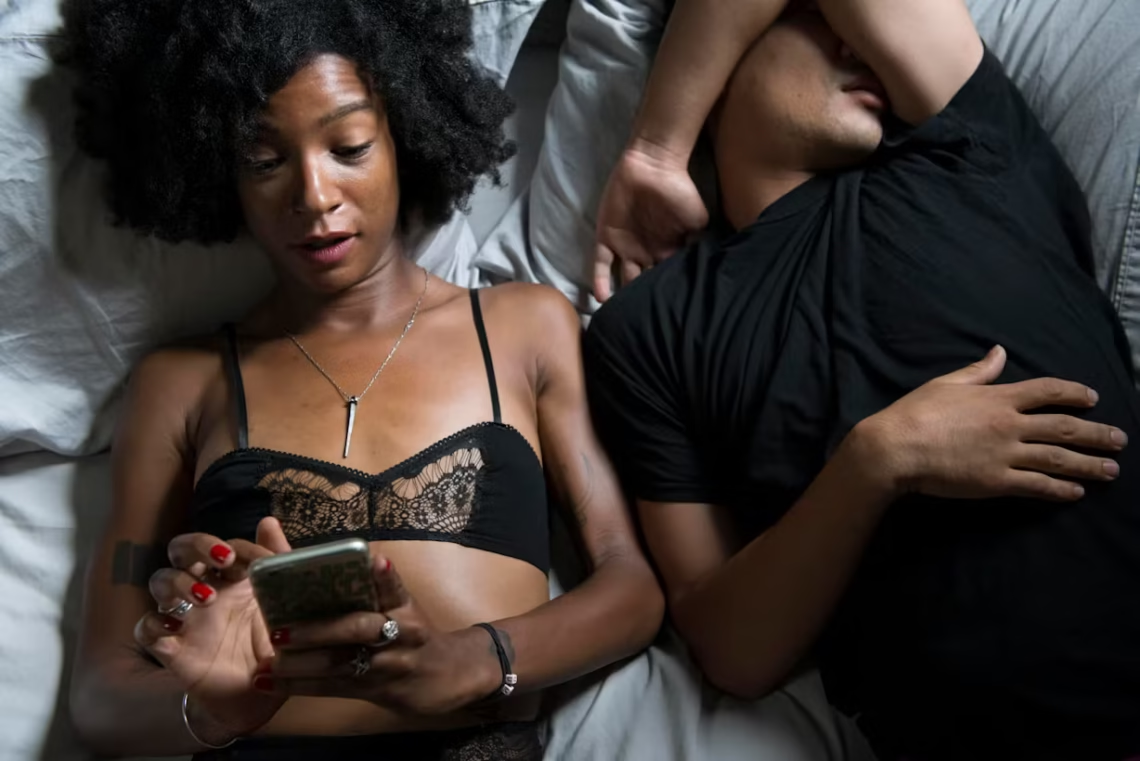
The single biggest overlooked reason why people seek emotional connection outside their primary partnership is a “lack of love” or, more accurately, the feeling of being unloved and uncherished within the existing relationship.
This was the top reported motivation in a study published in The Journal of Sex Research, with 77 percent of respondents citing or hinting at this reason, for example, stating they had “fallen out of love with their primary partner.” Experts clarify that this often translates to feeling unappreciated, neglected, or lacking playfulness, rather than a complete absence of affection for the partner.
I. The Primary Emotional Trigger: Lack of Feeling Loved
The phrase “lack of love” is a broad term that acts as a psychological umbrella for several deeper, more specific emotional deficiencies. While an unfaithful partner may state they have “fallen out of love,” relationship experts argue that the more precise explanation is that the partner no longer feels loved and cherished within the current relationship.
Emotional Neglect and Appreciation
Relationship and Wellness Coach Shula Melamed agrees that “lack of love” often manifests as:
- Feeling Unappreciated: The unfaithful partner feels their contributions, efforts, or presence are consistently overlooked or taken for granted.
- Neglect: They experience a lack of attention, quality time, or emotional responsiveness from their primary partner, leading to feelings of loneliness within the relationship.
- Missing Playfulness: The relationship has become overly functional, focused only on logistics, and devoid of shared joy, spontaneity, or lightness.
Experts stress that love is a dynamic process—a “verb, an action, and a skill”—that requires continuous nurturing and replenishment. When partners fail to actively invest effort and communicate, the emotional reservoir can deplete, making a third party’s attention highly appealing.
The True Blame: Choices, Not Shortcomings
Relationship expert Chelsea Leigh Trescott notes that while this emotional void is the trigger, it’s crucial for the betrayed partner to understand that the infidelity is ultimately about the unfaithful partner’s choice and inability to communicate their needs, not a reflection of the betrayed partner’s worth. As Licensed Marriage and Family Therapist Racine R. Henry, Ph.D., states, infidelity is rarely about how one partner feels about the other; it’s about the unfaithful partner feeling neglected, bored, or even invincible due to their own internal issues.
II. Other Major Motivations for Seeking External Connection
While the feeling of being unloved is the primary emotional trigger, the study identified several other major motivations that drive infidelity.
1. Sensing Emotional Distance (Neglect)
Closely related to the lack of love is the feeling of neglect. 70 percent of respondents admitted to infidelity because they felt neglected. Marriage and family therapist Dr. Caroline Madden explains that when a partner feels rejected, hurt, or overlooked but isn’t ready to end the relationship, infidelity can appear to be the easiest, albeit most destructive, way to gain the validation and attention they are missing. Seeking external connection is a misguided effort to fill an internal void caused by the perceived emotional distance in the primary relationship.
2. Craving Multiple Physical Experiences
The second most common reason for infidelity was the desire for a greater variety of physical connections. This motivation often signals an internal dissatisfaction or boredom in the partner seeking external experiences. Dr. Henry suggests this desire is less about the quality of intimacy in the primary relationship and more about the unfaithful partner’s own issues, such as impulsivity or a need for constant novelty.
3. Infidelity Driven by Situations (Circumstantial)
A large segment of infidelity is driven by circumstance, rather than planned dissatisfaction. 70 percent of respondents reported situational factors, frequently using statements like, “I was drunk and not thinking clearly.” While intoxication is not an excuse for betrayal, psychotherapist Dr. Fran Walfish notes that situational infidelity doesn’t necessarily reflect a permanent lack of love. If the act was a one-time mistake and the person demonstrates sincere remorse, regret, empathy, and offers a genuine apology, the broken trust can potentially be healed with commitment from both partners.
4. Infidelity as a Reaction to Anger (Retribution)
Retribution for a partner’s prior infidelity or anger following a major argument was the sixth most common reason, with 43 percent identifying it as their primary motivation. This type of infidelity is often highly impulsive and emotionally charged, intended to inflict pain or regain a perceived balance of power after a relational injury. It uses the act of betrayal as a weapon in a wider relationship conflict.
5. Affairs Driven by Insecurity (Self-Esteem Boost)
A significant 57 percent of people cited the need to boost their own self-esteem as a major reason for infidelity.1 Relationship therapist Rhonda Milrad, LCSW, explains that the unfaithful partner feels insecure and uses the thrill and validation of an extramarital affair to feel better about themselves. These insecurities can stem from:
- External Factors: Anxiety over career, age, or physical appearance.
- Relational Dynamics: Feeling powerless or minimized within the primary relationship, seeking to reclaim a sense of control.
- Family Background: Deep-rooted feelings of insignificance or unworthiness originating from childhood that continue to affect adult relationships.2
6. When Physical Desire is the Primary Motive
About one-third of participants admitted they were unfaithful simply because they wanted to engage in physical activity, highlighting that for a sizable minority, the act is purely physical and not primarily about emotional connection or escape from a bad relationship.
III. Gender and Personality Differences
The study also revealed key distinctions in motivations based on individual characteristics:
| Motivation | More Likely to Cite |
| Lack of Love/Neglect | Women |
| Variety/Physical Desire/Situational | Men |
| Desire for Physical Variety | Those with Commitment Issues |
| Lack of Love and Commitment | Hopeless Romantics |
Ultimately, experts are unanimous: being cheated on is never the fault of the betrayed partner. The infidelity stems from the choices, character issues, and unmet needs of the unfaithful individual, not the shortcomings of the person they betrayed.
Trending Right Now:
- My Mother-in-Law Tried On My Wedding Dress and Destroyed It — So I Made Her Regret It Publicly
- He Cheated. She Laughed. I Served Them Both a Slideshow of Karma
- “I Overheard My Husband and Our Neighbor’s Daughter — So I Came Up With a Plan She Never Saw Coming”
- He Couldn’t Move, But He Knew Something Was Wrong — So He Looked Up
- I Gave a Ride to a Homeless Man — The Next Morning, Black SUVs Surrounded My Home
- I Married My Former Teacher — But Our Wedding Night Revealed a Secret I Never Saw Coming






Leave a Comment