
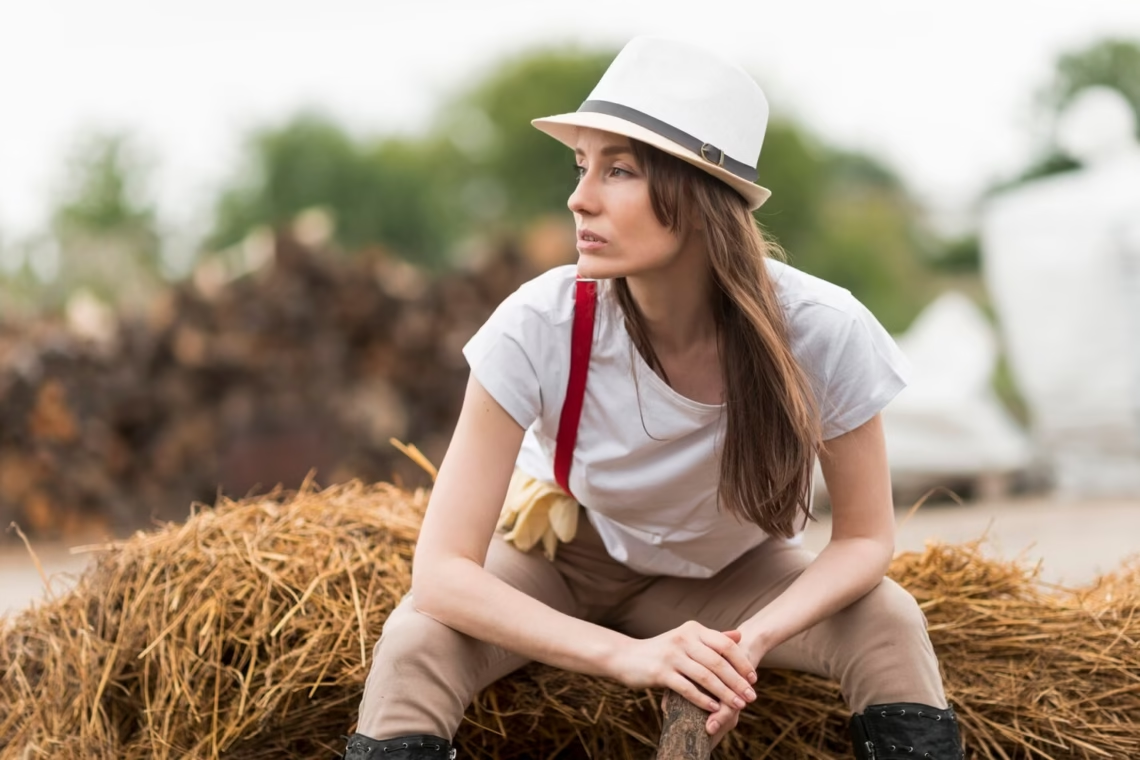
I clearly remember the day Grandma May’s will was revealed. It was meant to bring comfort, but instead, it stirred up a storm of emotions inside me. Sitting quietly in the lawyer’s cramped office, I was stunned when he announced that my beloved grandmother’s farm—our farm—was being left to my cousin Christine, who barely ever set foot there except to snap photos for her social media. Meanwhile, Grandma had given me only a puzzling letter and a curious condition: I was allowed to live on the farm as long as I wished, and during that time, the land couldn’t be sold.
The lawyer confirmed that Christine was now the legal owner. A wave of disappointment and anger swept over me. She never truly cared for the farm, didn’t share Grandma’s dreams, and rarely spent long days or nights there. She hadn’t been there to welcome newborn calves or nurture seedlings in the greenhouse. Yet, she held the title, while I—who had put in the work and love—was left with only the right to stay. My cheeks burned with the pain of betrayal and confusion.
Christine sat across the room, smirking slightly. Wearing a trendy city coat, she tapped her polished nails on the lawyer’s desk, looking bored by the whole affair. I could tell she was thrilled by this unexpected gain. She even checked her phone during the reading. It made my blood boil thinking about how she used hashtags like “#farmvibes” after barely spending an hour on the property, while I was there every day, doing all the hard work.
“Are you alright, Morgan?” the lawyer asked softly, noticing my trembling hands and pale face. His tone held a gentle sadness. He slid an envelope across to me. “Your grandmother left this letter for you.”
My heart pounded as I broke the seal. Grandma’s messy handwriting pulled at memories, bittersweet and tender. Her words read:
Dear Morgan,
If you’re reading this, I’m no longer with you. I see how much this farm means to you—it’s part of who you are. I know you might be upset that I left it to Christine, but trust me, there’s more to this story. I want to make sure the true caretaker of the farm steps forward.
You can live here as long as you want. As long as you stay, the farm can’t be sold. Please be patient—after three months, the next part of my will will be revealed. Don’t lose faith in this land or yourself until then.
With all my love,
Grandma
Tears threatened to fall, but I fought to keep them hidden from Christine. The letter was comforting yet maddeningly vague. Why would Grandma do this? What secrets was she hiding? Why trust Christine with the title and not me? Did she doubt I could handle it? The confusion cut deep.
Later, Christine approached, smirking that infuriating way. “Sorry things turned out like this,” she said flatly, “but it is what it is.” Maybe Grandma had her reasons. “At least you get to stay, so I guess we’re neighbors now.” The word “neighbors” dripped with sarcasm, as if I were an unwelcome shadow on her new property.
I stood tall, gathering my courage. “I’m staying,” I said firmly. “Don’t think about selling while I’m here.”
She shrugged casually. “Fine. But if you ever want out, just say the word. Developers are already calling, ready to pay big money. You could buy a condo in the city.” She handed me a paper with a surprisingly large sum written on it.
Something inside me snapped. Did she really see this as just another asset? “This isn’t about money, Christine,” I said, voice tight. “This place is who I am. It’s Grandma’s legacy.”
She sighed, feigning boredom. “Sure, sure. But farmland is just land. We can make more money another way. If you want to keep milking cows at dawn, go ahead—but don’t complain when it’s sold. Your tenancy won’t last forever.”
Clutching Grandma’s letter, I turned away, ignoring her cruel words. That evening, I took the bus back to the farm, lost in thought and nearly missing my stop. The driver’s voice jolted me: “End of the line!” I hurried off, greeted by familiar scents—fresh hay, earthy soil, and crisp winter air. The wide fields stretched under an open sky, dotted with patches of snow. Mom used to say, “This land is tough but generous—just like your grandma.” Now, I felt that toughness too.
I walked to the old farmhouse, a white two-story building showing its age—chipped paint, dusty windows—but the porch still welcomed me. Memories flooded in: afternoons shelling peas with Grandma, lemonade on warm summer days. The house was quiet, filled only with ghosts of the past.
I found the hidden key by the porch steps—a tradition we never broke. Inside, the floorboards creaked like old friends. Grandma’s crocheted blankets still draped the couch, and her radio sat patiently on the kitchen sill. My footsteps echoed in the silence. I fought back tears; there was work to do. With Christine so close, I couldn’t afford to fall apart.
That night, the wind howled outside, rattling the windows. I lit the old furnace and gathered firewood. Messages popped up on my phone from former coworkers, asking why I’d suddenly stopped showing up at my city job. I replied simply: “Family emergency. I’ll be away for a while.” Then I turned it off and focused on the farm.
The days that followed were filled with hard work: fixing the barn, tightening the drooping fence in the north paddock, feeding the older goats extra. I rose at dawn to tend the animals, aching but determined. “Morning, Dolly,” I whispered to the old cow, stroking her nose. She flicked her tail in greeting. Despite exhaustion, purpose grew in me—this land depended on me, just like Grandma had depended on me.
One frosty morning, fresh footprints in the snow near the barn made my heart race. Was it Christine, or a developer’s scout? I searched but found no one. The tracks vanished near the road. I felt unease settle in—maybe she was testing if I’d stay or if there was a way to bypass Grandma’s conditions. I steeled myself; no one would push me off my home.
Around then, Mr. Daniels, an old neighbor and family friend, arrived. He spotted me struggling with a broken fence post. “Need a hand, Morgan?” he asked, stepping out of his pickup. Relief warmed me. “Mr. Daniels, great to see you,” I said, handing him tools. Together, we worked and shared stories. He told me Grandma had confided her worries about the farm’s future. I wondered if she’d always feared Christine might cause trouble—and that’s why she left the will’s second part hidden.
One evening, rummaging through the attic, I found a dusty trunk filled with old photos, journals, and letters. My heart raced—I might finally be piecing together Grandma’s plan. Under the flickering lantern, I read her diary from years ago. Most entries were everyday notes, but some mentioned “the will” and “giving Morgan a chance to prove she’s the true guardian.” I paused, tears prickling as I read her words: “Christine cares only for money, but Morgan understands the soul of this land. I must test them both.” Gratitude and sadness washed over me. Grandma wanted me to have the farm, even if unofficially, but I had to earn it.
Time passed. Winter’s grip loosened as the first signs of spring appeared. I poured my savings and sweat into reviving the farm—repairing the barn, buying feed, and hiring an old classmate to help with heavy chores. Some nights, I collapsed into Grandma’s bed—my bed now—too exhausted to read. But inside, something blossomed: a deep sense of home. The farm’s rhythm was becoming mine.
One afternoon, Christine pulled up in a sleek SUV. Wearing sunglasses and flashing a smirk, she surveyed the yard. “Still hanging around?” she asked. “Not surprising.” She carefully stepped around a puddle, her face twisting in distaste. I forced a polite smile. “Yep, I’m still here.” “I already said I’m not leaving,” I added. Christine sighed heavily and rolled her eyes. “Do you get it, Morgan? This place means nothing to you. If you just step aside, we could cash in with some developers.” She waved a glossy brochure showing plans for suburban homes. A pit formed in my stomach.
“Grandma let me stay, Christine.” “I told her flat out: ‘You can’t sell unless I move out.’” “So, the second part of the will should be coming soon, right?” I asked. Christine raised an eyebrow. “We’ll see if that changes anything.” Then she warned, “You’re passing up a big opportunity, cousin. Don’t come crying to me later.”
Once she left, I leaned against a fence post, my heart pounding with anger. She was so blatant. But I thought of Grandma’s letter: “Please be patient, my dear. I will share the second part of my will in three months.” That day was approaching, and I hoped it would clarify how I could legally keep the farm—or at least block Christine’s harmful plans. Until then, I kept going. Mr. Daniels stopped by more often, offering farming advice. By now, I probably lost my city job, but honestly, I didn’t miss it. The farm kept me busy all day, even though it wasn’t a steady paycheck. If the will’s second part didn’t favor me, how could I manage to keep afloat?
Finally, the day came to hear what was in Grandma’s second will. The lawyer called both Christine and me to his office. She wore a smug smile, likely waiting to kick me out. Fear clenched my stomach. The lawyer opened a sealed envelope and read aloud:
“My beloved grandchildren, Christine and Morgan,
Three months have passed, and I believe the true caretaker has revealed herself. Christine, though the farm was left to you on paper, your heart never connected with this land. Meanwhile, Morgan has poured her soul into it. If Morgan continues to care for the farm, she will receive full ownership. Christine will receive a small sum but no other claim. This is my final decision.
With love,
Grandma May.”
Relief and joy flooded me. Christine’s eyes widened in disbelief, her face flushing with rage. “This is ridiculous! You gave it to me first and now you’re taking it back?!” she fumed. The lawyer calmly explained these were Grandma’s firm instructions, legally binding since I stayed and cared for the property. He presented evidence—neighbor statements, farm supply receipts, records of improvements. Christine was furious but powerless.
In that moment, I felt overwhelming peace and happiness. All the effort, struggles, and emotions led me here. The farm truly belonged to me, just as Grandma intended. Christine stormed out, threatening legal action, but I doubted she had a strong case. The lawyer assured me everything was secure.
Back at the farm, Mr. Daniels greeted me with a broad smile. “Well? How’d it go, kid?” I grinned, almost bursting. “She really gave it to me, Mr. Daniels! The farm’s mine!” He cheered and hugged me. Even Dolly, my old cow, mooed as if congratulating me.
Tears of gratitude for Grandma May welled up. She had tested me but gave me the chance to prove myself. She taught me to persevere, to cherish the land, and to value family over greed. Ironically, Christine’s greed was her undoing—she never connected with the farm or community. Meanwhile, I put my heart into it, and that made all the difference.
Months later, I assembled a small team to help tend the fields. I turned part of the land into a community garden, offering neighbors a place to grow their own vegetables. Mr. Daniels said Grandma would be proud. People came to pick strawberries, kids learned farming, and joy spread. I heard Christine sulked for a while, then moved on to buying and selling city houses. We rarely spoke.
One afternoon, I found a final letter from Grandma tucked in the attic trunk:
Morgan, if you’re reading this, you’ve captured the farm’s true spirit. I always believed you would, but I hoped you’d fully embrace it. Christine never truly cared for this land—I wanted to spare you both false hope. My dear granddaughter, continue what I started. Follow the farm’s lead and let love grow in every corner. I trust you.
Grandma May
Tears fell on the note. “I won’t let you down,” I whispered. Sunlight streamed through the attic window, warming me like Grandma’s silent blessing.
Over time, I realized the farm was more than a family inheritance—it was part of who I am. Some mornings, I’d step outside at dawn, breathe in the fresh air, feel the earth beneath my feet, and listen to the animals waking up. I felt connected and whole. Memories of following Grandma around as a child, listening to her gentle voice, kept her spirit alive.
Neighbors noticed the changes—fresh fences, flourishing fields, a thriving volunteer program. Visitors said the farm felt warm and welcoming, calling it “Morgan’s lively place.” Despite occasional setbacks like broken equipment or rough weather, I found joy in the work. The bond with the land made me forget my city job regrets. This was honest, grounding work.
One evening, I watched the sunset paint the sky in pink and gold. The animals settled quietly. I felt a bittersweet mix—missing Grandma, hoping to see her step out of the barn with her familiar smile. My heart tightened with love and calm. I had become the caretaker she hoped for.
I emailed a friend from my old job, sharing how the farm transformed—from a sad reminder of Grandma’s passing and family strife to a symbol of resilience. She said, “You found your calling.” I laughed softly. Maybe she was right.
Sometimes, I still worried about Christine. Though the legal battles ended with clear ownership, and I had all the documents ready, I wondered if we’d ever reconcile. But that was a separate journey. For now, the farm was safe.
Later, we held a small harvest festival. Neighbors joined to celebrate the crops. Mr. Daniels played country tunes, families picked apples, and children enjoyed hayrides. Fresh cider and pies were shared. The farm once on the edge of loss had become a hub of community and kindness. I didn’t earn much, but enough to cover bills and care for the animals—that was enough.
A few months after the will reading, an old friend of Grandma’s visited. She told me Grandma often boasted, “Morgan’s the true heart of this place. My granddaughter loves it as much as I do.” Hearing that filled me with warmth. The exhaustion and tears were worth it—I was making Grandma’s dream real.
Challenges remained—repairs, finances, few helpers—but Grandma’s faith carried me through. Whenever doubt crept in, I read her final letter or watched a sunrise. The farm connected me to something bigger, a legacy stretching back generations.
One year after the turmoil with Christine, the farm thrived. I expanded the garden, installed solar panels to save money, and took in rescue animals. I still rose before dawn, but with purpose. In peaceful moments, I’d touch the old oak tree, feeling its bark and imagining Grandma beside me.
Visitors sometimes asked, “Isn’t it lonely on the farm?” I’d smile and say, “I’m never alone. The land speaks, the animals greet me, and Grandma’s memory guides my way.” They didn’t always understand, but that was fine.
Looking back, I see how close I was to losing it all—the day Christine flaunted the deed, the fear of developers taking over. Without Grandma’s clever plan, I might have given up. But love and loyalty held me steady. Grandma’s wisdom made sure the right person would care for the farm.
A local paper ran a story on “Morgan’s Revived Farm,” celebrating the community garden and harvest festival. In the interview, I spoke of Grandma’s legacy—how she left a puzzle in her will and I completed it by dedicating myself to the land. They called me “the determined granddaughter who defended her grandma’s farm.” I laughed at the drama, but it felt good to have others recognize what Grandma and I always knew: this farm is a symbol of love.
I wonder if Christine ever read that article, if it stirred regret. Maybe she ignored it. I held no grudges. I won by nurturing the farm, turning the past around with beauty.
In the end, Grandma’s mysterious letter made sense. She didn’t intend for Christine to inherit the farm—she wanted to see if I’d stand my ground. I did. Despite tough weather, money troubles, and doubt, I persevered. The day I truly understood the farm was mine was one of the happiest in my life. It was hard work, but it made me feel rooted in a way the city never did.
I hope my story offers hope to someone else. Even when life’s blessings feel stolen or blocked by selfishness, love and determination can prevail. Grandma’s letter and the second will were her way of entrusting me with this role—both in spirit and in law. I accepted it wholeheartedly.
Looking ahead, I imagine telling my children or grandchildren about nearly losing the farm—about the stressful months, the fear of eviction, the search through old diaries. They’ll laugh at the drama and marvel at how close we came to losing it to development. Then they’ll see the blossoming orchard, the thriving fields, and the busy barn, understanding that family traditions demand dedication. I’ll give them Grandma’s diaries, full of her notes and secrets, her last brilliant plan to protect this land she loved. I hope to see that same wonder in their eyes.
This is how I overcame heartbreak, confusion, and family betrayal to fulfill Grandma’s final wish. I carry her memory close, feeling her presence in every sunrise over the fields. Though Christine once held the deed, it was just a step toward what truly matters: love, not greed, guiding this land’s future. I’ve never felt more peaceful or certain that long ago, Grandma set me on this path with a puzzle only I could solve—leading me to the future I was always meant to have.
Trending Right Now:
- My Mother-in-Law Tried On My Wedding Dress and Destroyed It — So I Made Her Regret It Publicly
- He Cheated. She Laughed. I Served Them Both a Slideshow of Karma
- “I Overheard My Husband and Our Neighbor’s Daughter — So I Came Up With a Plan She Never Saw Coming”
- He Couldn’t Move, But He Knew Something Was Wrong — So He Looked Up
- I Gave a Ride to a Homeless Man — The Next Morning, Black SUVs Surrounded My Home
- I Married My Former Teacher — But Our Wedding Night Revealed a Secret I Never Saw Coming


Leave a Comment