
A Bronze Tribute Gone Wrong: Celebrity Statue in Colombia Sparks Uproar
The unveiling of a bronze statue meant to honor a beloved television icon in her hometown of Barranquilla, Colombia, has stirred up a storm of controversy and ridicule instead of admiration. What was envisioned as a proud tribute to a global entertainment legend has quickly turned into a viral sensation — and not for the right reasons.
The statue, meant to symbolize both local pride and international acclaim, has shocked fans and critics alike. Many have expressed disbelief over the statue’s failure to capture the grace, charm, and likeness of the star it was supposed to celebrate. Social media erupted with memes, jokes, and fierce debates as images of the sculpture spread rapidly across the internet.
What began as a tribute has now morphed into a larger cultural flashpoint. Beyond criticism of the artwork itself, the uproar has opened up wider discussions about civic pride, public art, and how communities choose to honor their most famous figures. The backlash has been so overwhelming that it has overshadowed the intended celebration, casting a shadow on what should have been a proud moment for the city.
This statue now joins a growing list of controversial celebrity monuments around the world — highlighting the ongoing challenges faced by artists and city officials when trying to immortalize living stars. With fame comes scrutiny, and translating that into sculpture is proving to be a daunting task.
A Monument of Ambition: The Scale and Story Behind the Statue
The creation of the now-infamous bronze statue was far from a casual undertaking. It represented a major commitment of time, talent, and city resources — a bold attempt by Barranquilla officials to honor their most celebrated hometown star in a way that matched her global recognition and cultural legacy.
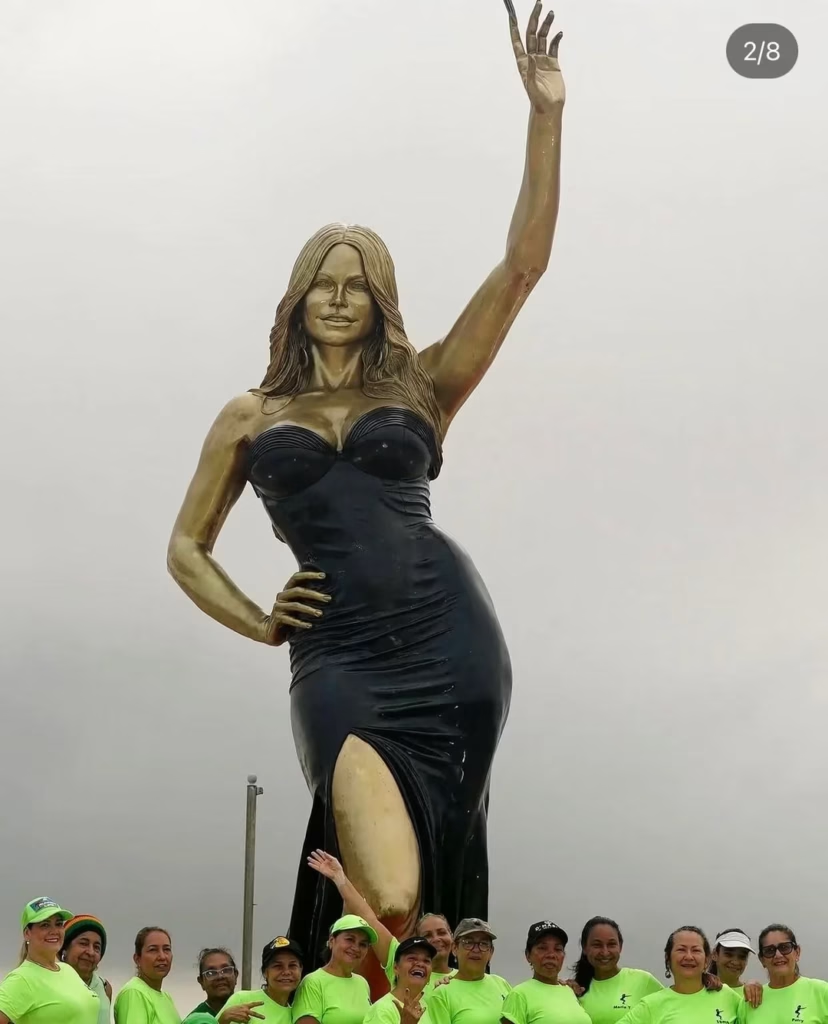
Towering over 5 feet tall and weighing in at more than 5 tonnes, the sculpture was built on an ambitious scale that mirrored the city’s pride in its world-famous native. The project spanned seven months and brought together a team of approximately 35 contributors, including students from local institutions who were invited to participate in what was envisioned as both a cultural tribute and an educational opportunity.
At the helm was Yino Márquez, a respected local artist best known for his previous work sculpting a statue of international pop sensation Shakira — another Barranquilla icon. Márquez was chosen for his expertise in crafting large-scale public monuments and his familiarity with the technical complexities that such projects demand.
Set on the Gran Malecón, one of Barranquilla’s most prominent waterfront promenades, the statue was strategically placed for maximum visibility. The location was intended to draw both locals and tourists, offering a symbolic link between the city’s evolving identity and one of its most influential cultural figures.
Behind the scenes, the statue’s development involved meticulous planning — from design sketches and mold-making to casting and final installation. The project also required a considerable financial investment, reflecting the city’s deep commitment to honoring the legacy of a woman who helped place Barranquilla on the world stage.
Honoring a Global Icon: Sofia Vergara’s Journey from Barranquilla to Hollywood
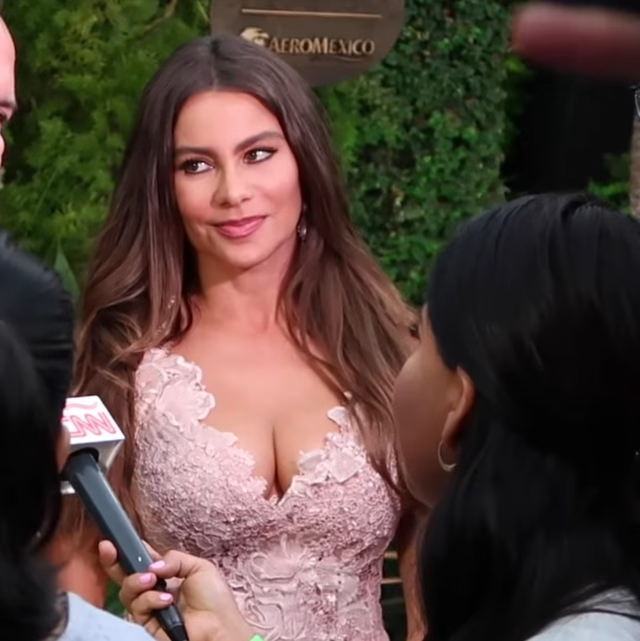
At the heart of this much-debated statue stands none other than Sofia Vergara — a powerhouse in global entertainment and a proud daughter of Barranquilla. At 53, Vergara has become one of the most recognizable Latin American figures in the world, carving out an extraordinary career across television, film, and business.
Her rise from modeling in Colombia to international stardom is a modern-day success story. She became a household name through her role as Gloria Delgado-Pritchett in the award-winning sitcom Modern Family. With her infectious humor, signature accent, and unforgettable screen presence, Vergara captivated audiences around the globe. Her performance earned her multiple Emmy nominations and helped make her one of the highest-paid actresses on television during the show’s prime.
After Modern Family, she continued to expand her reach by joining the judging panel of America’s Got Talent in 2020. Her warm personality, quick wit, and genuine support for emerging talent won over a whole new wave of fans — solidifying her presence in American pop culture while staying true to her Latin roots.
But Sofia Vergara is much more than just a screen star. She’s also a highly successful entrepreneur, having launched multiple product lines and business ventures that turned her into one of the wealthiest Latin American celebrities. Her sharp business instincts and strong personal brand have made her a global symbol of success, elegance, and empowerment.
More importantly, Vergara’s influence goes beyond fame and fortune. She represents progress — breaking barriers for Latin American actors and helping shift the portrayal of Hispanic characters in mainstream media. Her journey has inspired countless aspiring performers, while bringing pride to Colombia and broader Latin America.
From Celebration to Controversy: The Statue Unveiling That Sparked a Firestorm
What was meant to be a proud, celebratory moment for Barranquilla quickly took a turn into unexpected controversy. The official unveiling ceremony for the bronze statue honoring Sofia Vergara was carefully orchestrated — a public event bringing together city officials, community members, and the media, with the goal of honoring one of the city’s brightest stars and creating a landmark of cultural pride.
However, one key figure was noticeably absent: Sofia Vergara herself. At the time of the ceremony, she was reportedly enjoying a vacation in Sardinia with friends and family. While her absence is understandable given her demanding schedule and personal commitments, her presence might have helped soften the initial reception and bring greater positive attention to the tribute.
Barranquilla’s mayor, Alejandro Char, took center stage at the event, delivering heartfelt remarks that reflected the city’s deep affection and admiration for Vergara. “Barranquilla surrenders at your feet, telling the whole world: thank you for being who you are, thank you for being a Barranquillera,” he proclaimed, proudly acknowledging the impact she has made on the world stage.
The mayor also spoke of Vergara’s vibrant personality, describing her as a figure full of “joy, charisma, authenticity, and unique spirit.” His speech made it clear that the intention behind the statue was rooted in love, pride, and a genuine desire to celebrate everything Sofia represents to her hometown.
Yet, despite these well-meaning efforts, the unveiling was quickly eclipsed by public backlash. The statue’s likeness was widely criticized, and the internet was flooded with jokes, memes, and harsh reactions. The emotional speeches and celebratory mood were soon overshadowed by mockery — exposing the stark contrast between the city’s vision and the public’s perception.
This incident serves as a cautionary tale for public officials: even the most sincere tributes can backfire when the execution doesn’t align with public expectations — especially in an age where viral criticism travels faster than praise.
When Praise Turns to Punchlines: The Internet Roasts Sofia Vergara’s Statue
What started as a well-intentioned tribute quickly spiraled into a social media spectacle. The unveiling of Sofia Vergara’s statue didn’t just disappoint — it ignited a global wave of mockery, with platforms like Reddit and Twitter becoming battlegrounds for biting criticism and hilarious takedowns. The sheer scale and speed of the backlash have turned a local homage into an international embarrassment for the city of Barranquilla and the artist behind the sculpture.
Among the loudest voices were Reddit users, who wasted no time sharing their brutally honest takes. From mild disappointment to outright roast sessions, the commentary pulled no punches. One particularly raw comment came from a fellow Barranquilla native:
“As Shakira and Sofia I also share the same place of birth as them. And let me tell you, they need to stop making these statues — they are horrendous. I’ve seen the one for Shakira and it looks nothing like her.”
That sentiment was echoed in what quickly became a viral mantra: “Who approved this?!?!” The rhetorical question now echoes across forums, symbolizing widespread disbelief over how such a statue made it past planning, production, and public display without someone stepping in.
Beyond the jokes, there was serious artistic critique too. Several users zeroed in on what they saw as a basic failure in execution — especially in capturing Sofia’s facial features.
“Can we get some people who know how to do faces when making statues?” one frustrated commenter asked, summing up a recurring theme in the backlash.
And then came the humor — sharp, creative, and unforgiving. One user wrote,
“Looks like someone with a big foot fetish made that statue,” poking fun at the statue’s awkward proportions and strange emphasis.
While some reactions were laced with laughter, the underlying message was clear: the public expects more when it comes to honoring a cultural icon. The viral wave of memes and mockery has exposed not just flaws in artistic execution, but in the oversight and decision-making that allowed such a project to go forward unchecked.
Statues Gone Wrong: Why Sofia Vergara’s Tribute Is Being Compared to Cristiano Ronaldo’s Infamous Bust
As the backlash against Sofia Vergara’s statue gained momentum, the internet did what it does best — drew comparisons. And no celebrity sculpture disaster is more iconic than the notorious Cristiano Ronaldo bust unveiled at Madeira Airport in 2017. With its warped features and almost comical lack of resemblance, the Ronaldo statue became an instant meme legend — a gold standard for public art fails. Now, Vergara’s statue finds itself being measured against that infamous yardstick.
Social media users were quick to make the connection. One sarcastic comment summed it up best:
“She could do worse…”
It’s a backhanded defense, suggesting that while Sofia’s statue is bad, at least it hasn’t dethroned Ronaldo’s as the worst of all time — yet.
These kinds of comparisons aren’t just casual jokes; they highlight a recurring issue in public art: the struggle to faithfully depict celebrities, especially those who are alive and constantly in the public eye. Capturing their likeness in static form — particularly on a large, permanent scale — has proven to be a minefield of technical and creative challenges.
The fact that these side-by-side critiques arise so quickly online suggests that “failed celebrity statue” has become its own genre of cultural commentary. There’s even a kind of morbid anticipation to see which star’s likeness will next fall victim to awkward design or poor execution. These statues now come with a built-in risk of going viral — for all the wrong reasons.
And in today’s hyper-connected world, local projects like this are no longer judged just by residents. Within minutes, a statue in Barranquilla is being dissected, mocked, and memed in New York, Tokyo, or London. The global spotlight means higher expectations — and far more brutal consequences when those expectations aren’t met.
Ultimately, the comparison to Ronaldo’s sculpture shows that the problem goes deeper than any single statue. It points to larger issues in how public art is planned, critiqued, and signed off — and the rising pressure on artists and municipalities to get it right in an era where the internet never forgets.
Should We Be Building Statues of the Living? The Deeper Questions Behind the Backlash
While much of the criticism surrounding Sofia Vergara’s statue has focused on its appearance, the controversy has also sparked a more introspective conversation — one that dives into the deeper cultural and philosophical implications of honoring living celebrities with permanent public monuments.
The question is simple, yet profound: Should statues even be made of people who are still alive?
A particularly insightful Reddit comment captured this dilemma perfectly:
“All my life I’ve walked past statues of writers like Herman Hesse, who were, in their day, also just famous people. I’ve never thought twice about it. But it feels so odd to see statues made of living people.”
It’s a sentiment that resonates with many — a feeling of disconnection when faced with the idea of immortalizing someone whose story is still unfolding.
The same commenter went on to say:
“I imagine it makes perfect sense to have statues of people like Meryl Streep, yet despite her illustrious career, I would feel odd knowing she still walks the earth while a statue of hers stands somewhere. Statues of the living just feel… wrong somehow.”
This quiet discomfort points to a long-standing tradition in public art: statues have historically been reserved for those whose legacies can be viewed in full — after their passing, when history can judge their impact with clarity and perspective. It’s then, and often only then, that a life is deemed worthy of being cast in bronze.
Creating monuments to living figures invites risk — not just in how well the art captures them physically, but in whether the timing itself feels earned. With careers still in motion and public opinions ever-shifting, honoring someone too soon can feel premature — or even tone-deaf — especially when the execution falls flat.
This unease isn’t just about aesthetics; it’s about the meaning of legacy. Can we truly enshrine someone’s contributions before the final chapters of their story are written? Or do we risk turning public art into a popularity contest, driven more by trend than timelessness?
The Vergara statue, for all its flaws, has opened the door to a larger, ongoing dialogue: not just about how we remember greatness — but when.
Why Celebrity Statues Keep Going Wrong: The Artistic Hurdles Behind the Bronze
Creating a bronze statue of a celebrity might seem like a straightforward tribute — but in reality, it’s one of the most technically demanding and artistically risky challenges in public art. The Sofia Vergara statue controversy highlights exactly why so many such projects end up being met with confusion, mockery, or outright backlash.
Unlike ordinary sculptures, celebrity statues are under the microscope from the start. Audiences around the world are intimately familiar with their favorite stars’ appearances, thanks to constant exposure through high-definition photos, social media, film, and television. This creates an incredibly high bar for accuracy — any deviation from the expected image becomes instantly noticeable, and often unsettling.
Sculpting in bronze adds another layer of complexity. The medium is unforgiving — it lacks the softness and detail of photography, and translating emotion, expression, and personality into metal is no small feat. Sculptors must make difficult decisions about proportions, posture, and facial features, all while contending with the physical limits of bronze casting. What looks good in a drawing or clay model doesn’t always survive the translation into a 5-tonne metal monument.
The issue becomes even more complicated when multiple hands are involved. In the case of Vergara’s statue, the process spanned seven months and involved a team of 35 people — artists, students, engineers, and technicians. While this collaborative approach can be enriching, it also introduces a greater chance of miscommunication, stylistic inconsistencies, and loss of cohesive vision.
And then there’s the politics of public art. A statue meant for a prominent location like Barranquilla’s Gran Malecón has to please everyone — from city officials and funders to local residents and the celebrity being honored. That pressure often forces compromises in artistic direction, with creators trying to strike a balance between bold artistic choices and safe, crowd-pleasing results. The outcome? A piece of art that ends up satisfying no one.
Ultimately, celebrity statues face a nearly impossible task: to turn a living, breathing, beloved icon into a cold, permanent object — and do so in a way that earns public approval. When even the slightest misstep can turn into a meme, it’s no surprise that so many of these tributes fall short of their ambitious goals.
Who Approved This? The Role of City Officials in Public Art Failures
The backlash surrounding Sofia Vergara’s statue has done more than spark artistic critique — it has opened a serious conversation about how cities make decisions when it comes to publicly funded art. The viral question “Who approved this?!” isn’t just a meme — it reflects genuine concern over how such projects are commissioned, approved, and paid for using public funds.
Public art — especially large, permanent installations meant to honor global icons — often involves substantial financial investment and international visibility. That makes the quality, planning, and execution of these projects even more critical. But in many cases, the people making final decisions — city officials, administrators, and committees — may lack the artistic background necessary to fully evaluate design proposals and technical execution.
In the case of the Vergara statue, a team of 35 people contributed to the project across various stages. While collaboration can be valuable, it also raises questions about oversight and accountability. With so many hands involved, who was ultimately responsible for ensuring that the statue met professional standards? When responsibility is shared too widely, it can be difficult to hold anyone truly accountable when things go wrong.
Budget constraints further complicate matters. Municipalities often operate with limited resources, which can lead to compromises in artist selection, rushed timelines, or scaled-back design and production quality. These financial pressures can result in public art that is more about checking a box than creating a lasting, meaningful tribute.
And when the subject is someone as internationally recognizable as Sofia Vergara, the stakes grow even higher. A statue in her honor isn’t just a local gesture — it becomes part of the city’s global image. Missteps on such a stage invite global ridicule rather than just local criticism, turning civic pride into public embarrassment.
This incident highlights a growing need for better processes in public art decision-making: stronger artistic oversight, clearer lines of accountability, and a willingness to prioritize quality over expediency. Because in the age of instant global feedback, one poorly executed tribute can haunt a city’s reputation for years to come.
More Than Just a Statue: What the Sofia Vergara Controversy Says About Cultural Representation
The backlash over Sofia Vergara’s statue is about more than just a flawed likeness — it touches deep, complex issues of cultural representation and the responsibility that comes with public art. When a city chooses to honor a global icon, especially one as prominent as Vergara, the statue isn’t just about the individual — it becomes a symbol of national pride and cultural identity.
Vergara isn’t just a celebrity; she represents Colombian success on the world stage. So when her hometown of Barranquilla unveiled a statue that many consider artistically underwhelming, it wasn’t just the image of Vergara that took a hit — it was a missed opportunity to showcase Colombian artistic excellence to the world.
Instead of celebrating local talent and craftsmanship, the failed execution may have unintentionally fueled negative perceptions about artistic standards in the region. For a country with such rich cultural heritage, moments like these can feel like setbacks, especially when the art in question becomes a global punchline rather than a point of pride.
The issue is not isolated either. With both Vergara’s and Shakira’s statues drawing criticism, it raises concerns about recurring challenges in public art projects across Latin American cities. Whether it’s a lack of funding, insufficient training, or flawed project oversight, these patterns suggest deeper institutional issues that need to be addressed for future success.
In today’s world, where every statue unveiling is instantly uploaded, shared, and dissected online, the stakes are higher than ever. Global audiences don’t just judge the art — they draw conclusions about the culture and community behind it. That’s both a risk and an opportunity: when done right, public art can amplify national pride and cultural influence. But when done poorly, it becomes a viral spectacle for all the wrong reasons.
To truly honor cultural icons like Sofia Vergara, artists and municipalities must aim not only for accuracy, but for excellence — because in the age of social media, the world is always watching.
The Price of a Bronze Blunder: How Controversial Public Art Impacts City Economies
While most conversations around Sofia Vergara’s statue have focused on its artistic shortcomings, there’s another angle that can’t be ignored — the economic fallout. Public art is often pitched not just as a cultural asset, but as an investment. Cities like Barranquilla commission statues with the hope that they’ll boost tourism, enhance city branding, and attract global attention in a positive light.
But when the artwork becomes a global laughingstock, that strategy can backfire.
Instead of drawing visitors inspired by culture and pride, the city finds itself attracting ridicule and potentially discouraging future tourism. In the age of viral content, one badly executed statue can shape international perceptions of a city far beyond what any local press release or tourism campaign can repair.
Yet, there’s a strange twist. Sometimes, art fails so spectacularly that it flips into attraction status. Think of the infamous Cristiano Ronaldo bust or other widely mocked statues — people travel just to see the disaster in person. This phenomenon, often dubbed “dark tourism,” could ironically benefit Barranquilla. Visitors may now be curious to see the statue that got the world talking.
Still, there’s no ignoring the real costs. Bronze sculptures like Vergara’s require significant financial investment. Once installed, they’re not easy — or cheap — to remove or redo. That means cities often have to live with the consequences, for better or worse, for decades.
In the long term, the impact depends on how the city responds. Will Barranquilla treat this as a wake-up call to improve how public art is handled in the future — from artist selection to quality control? Or will fear of backlash discourage future investments in cultural projects altogether?
For cities aiming to blend culture with economic growth, the Vergara statue is a lesson in how high the stakes really are. Public art doesn’t just reflect the soul of a community — it can hit the budget, the headlines, and the bottom line.
What We Can Learn from the Sofia Vergara Statue Backlash
The controversy surrounding Sofia Vergara’s statue has become more than just a moment of public criticism — it’s a case study in how not to handle celebrity tributes. And for municipalities and artists planning similar projects, it offers some critical lessons that shouldn’t be ignored.
First and foremost, the backlash underscores the importance of getting the fundamentals right: investing in the right artist, ensuring strong quality control, and allowing enough time for thoughtful design execution. When dealing with global icons, there’s no room for shortcuts.
One key challenge is capturing a celebrity’s likeness in bronze — a medium that’s notoriously difficult for realistic detail. This raises an important question: should we even be trying to recreate photo-accurate depictions in public statues? Some artists and cities may find more success with abstract, symbolic interpretations that represent the subject’s impact or energy, rather than their exact physical features.
There’s also the deeper philosophical issue: Is it wise to immortalize living celebrities in permanent monuments? With lives and careers still evolving, and public perception ever-shifting, traditional statues may feel out of place. Cities might want to explore alternative ways to honor local legends — from interactive exhibits to digital installations — that carry less permanence but more flexibility.
Another major takeaway is the importance of community involvement and public communication. When residents feel left out of the process, or when the final result doesn’t align with public sentiment, it creates a disconnect that can overshadow even the most heartfelt intentions.
Lastly, in a world where every new statue can be photographed, memed, and critiqued within minutes, local projects must now meet global expectations. The bar has been raised, and future tributes will need to match not only artistic excellence but also thoughtful planning and clear cultural purpose.
The Sofia Vergara statue may have missed the mark — but the conversation it sparked could help shape more meaningful, respectful, and successful tributes in the future.
Conclusion: Art, Fame, and Accountability in the Age of Instant Judgment
The uproar over Sofia Vergara’s statue in Barranquilla has proven to be more than just another public art controversy — it’s become a reflection of the evolving dynamics between art, fame, and public accountability in the digital age. What began as a heartfelt tribute quickly turned into a cautionary tale, revealing the disconnect that often exists between grand civic intentions and the execution of complex artistic projects.
In a world where local efforts can go viral within minutes, this incident reminds us just how much public art still matters. The passionate responses — from harsh critiques to thoughtful reflections — show that people care deeply about how their cultural icons are represented. A statue isn’t just a structure; it’s a symbol, a story, and, ideally, a source of pride.
The global attention surrounding a single statue in Colombia illustrates how interconnected we’ve become. In today’s world, a misstep in material or message doesn’t stay confined to a neighborhood — it becomes a topic of international conversation. But with that risk also comes opportunity: public art has the power to uplift, inspire, and spotlight cultural excellence when done right.
Perhaps the most valuable outcome of this controversy is the dialogue it has sparked — conversations about who gets honored, how, and why. It’s a chance for communities everywhere to rethink how they celebrate living legends, and to ensure their tributes match the significance of the stories they’re meant to preserve.
As cities like Barranquilla reflect on this experience, one thing is clear: future celebrity tributes will need more than ambition — they’ll require vision, expertise, community input, and a deep respect for the global stage on which they now automatically stand.
When done with care and creativity, public art can still become a beacon of cultural pride. But in the era of instant feedback and worldwide scrutiny, getting it right has never mattered more.




Leave a Comment